
The High-Stakes Race for AI Memory
The world of artificial intelligence is powered by cutting-edge hardware, and a critical component of this is High Bandwidth Memory (HBM). For years, SK Hynix has held a dominant position in supplying HBM to industry giants like NVIDIA, but a new contender is making a significant move. Samsung, a global leader in memory chip production, has been working tirelessly to break into this lucrative market. Recent reports suggest the company has achieved a major milestone, setting the stage for a dramatic shift in the AI memory landscape.
Samsung’s HBM4 Passes Initial NVIDIA Quality Tests
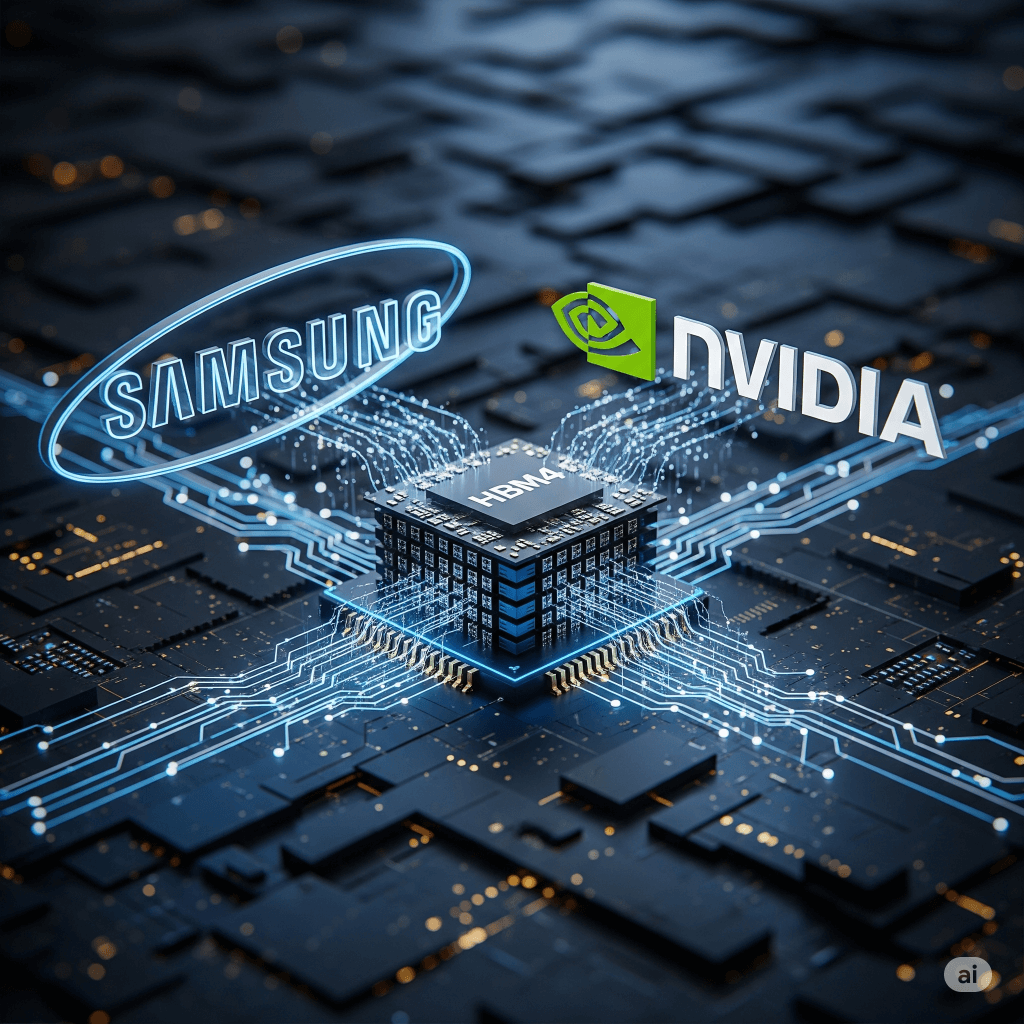
A recent report indicates that Samsung has successfully passed the initial prototype and quality tests for its next-generation HBM4 memory with NVIDIA. This is a monumental achievement, as NVIDIA’s qualification process is known for its strict and demanding standards. The HBM4 samples, which were shipped to NVIDIA last month, have been confirmed to be moving on to the next stage of pre-production testing. This phase involves analyzing the memory’s real-time performance with prototype GPU solutions, examining critical metrics like temperatures and speeds.
If these pre-production tests are successful, Samsung is on track to begin high-volume manufacturing of HBM4 by November. Putting it on a similar timeline to its rival, SK Hynix. This breakthrough is not only a win for Samsung but also a potential game-changer for the entire AI hardware ecosystem.
The Aggressive Strategy: Offering HBM3E at a Significant Discount
In an effort to secure its place in the NVIDIA supply chain, Samsung is not relying on HBM4 alone. The company is reportedly offering a substantial 20-30% discount on its HBM3E memory for NVIDIA’s H20 AI chip. This aggressive pricing strategy is a direct challenge to SK Hynix. Which has been the primary supplier of HBM3 and HBM3E. By offering a more attractive price point, Samsung is putting pressure on NVIDIA to diversify its HBM suppliers. The report suggests that NVIDIA is currently maintaining its position that it will verify the quality of both Samsung’s HBM3E and HBM4 before agreeing on HBM3E pricing with SK Hynix.
Why This Matters: A New Era of Competition
For a long time, SK Hynix has held a near-monopoly on the high-end HBM market. Particularly for NVIDIA’s AI accelerators. This has allowed the company to capture a large chunk of the market and earn billions in the process. Samsung’s struggles with its HBM3 process created an opening that its competitor expertly capitalized on.
However, with the reported success of its HBM4 quality tests and the attractive pricing of its HBM3E. Samsung is now in a strong position to regain lost ground. This renewed competition is beneficial for the entire industry. It encourages innovation, drives down costs, and ensures a more robust and diversified supply chain for the rapidly growing AI sector.
Conclusion: Samsung’s Path to Recovery
Samsung’s recent setbacks in the DRAM market have been well-documented, with the company losing a significant share to rivals. The success of its HBM4 qualification and the strategic pricing of its HBM3E represent a concrete step towards recovery. By taking these effective measures. Samsung is not only challenging the status quo but also reaffirming its commitment to being a leader in the global semiconductor industry. The coming months will be crucial as the company works to complete its qualification process and potentially secure a significant role in powering the next generation of AI with its HBM4 technology.