

The Google Tensor G5 is a huge step forward for the Pixel series, but can it handle the demands of modern mobile games like Fortnite? Let’s dive into the chip’s performance to separate the myths from the reality.
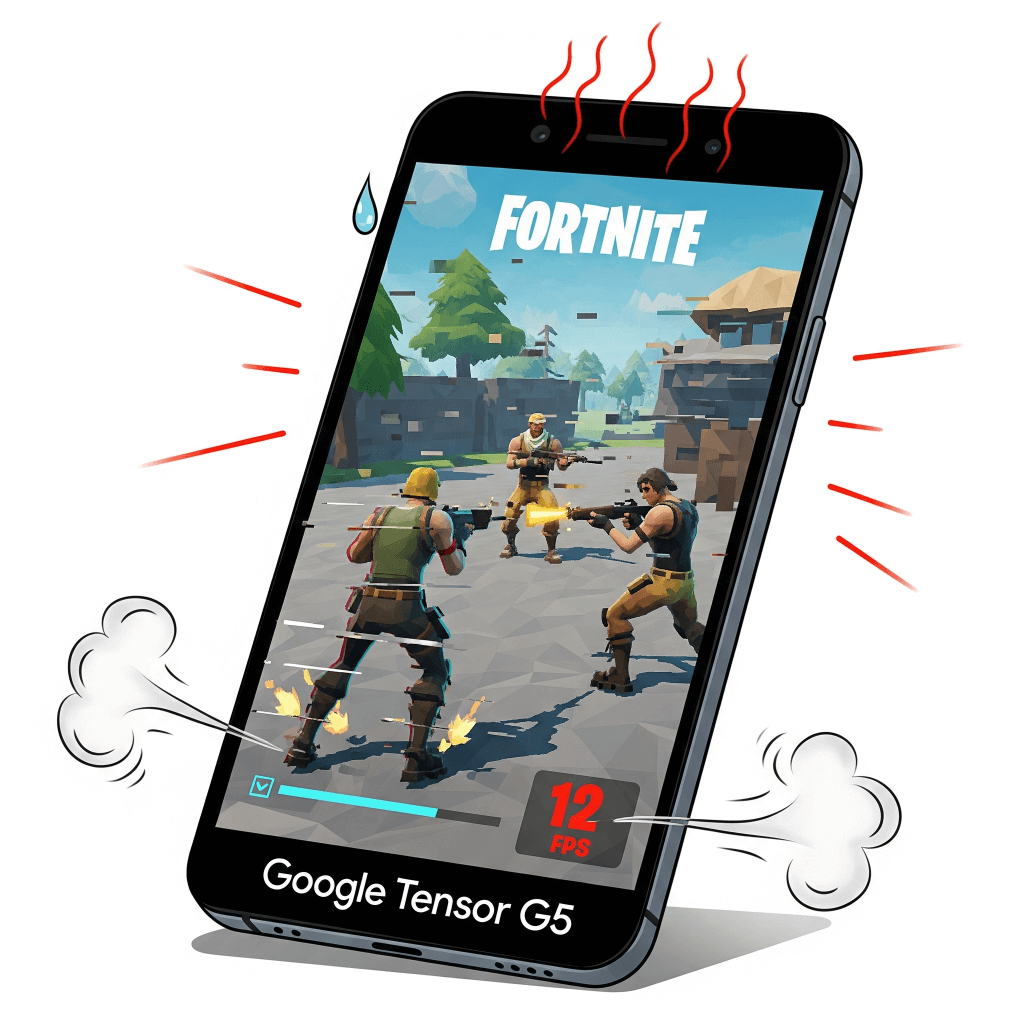
The Big Picture: What is the Tensor G5?
The Google Tensor G5 is the latest system-on-chip (SoC) designed by Google for its Pixel 10 smartphones. This chip is a major milestone for Google, as it’s the first Tensor chip fabricated by TSMC on a more efficient 3nm process, a significant departure from its previous collaboration with Samsung. This move was expected to bring substantial improvements in performance and efficiency.
CPU Performance: A Significant Leap
When it comes to the central processing unit (CPU), the Tensor G5 shows impressive gains. Benchmarks indicate a substantial improvement over the previous Tensor G4. In fact, in some single-core tests, the G5 is on par with or even slightly faster than rival flagship chips like the Snapdragon 8 Gen 3. This means that for everyday tasks, such as browsing, app navigation, and general responsiveness, the Pixel 10 is a speedy and fluid device.
GPU Performance: The Real Story
This is where the story gets more complex. The Tensor G5’s graphics processing unit (GPU) is where it truly differentiates itself from its competitors. Google has switched from Arm’s Mali GPUs to a new Imagination Technologies DXT GPU. While this new GPU is more powerful than its predecessor, early benchmarks and reviews reveal that it still lags behind the GPU performance of other flagship chips.
For serious mobile gamers, this is a crucial detail. The gap in GPU power means that while the Tensor G5 can run demanding games, it may not be able to maintain the high frame rates or graphical settings that are possible on phones with Snapdragon or Apple’s A-series chips.
Is the Tensor G5 Good for Gaming?
Based on early tests and user feedback, here’s the verdict:
- Stable Thermals: A positive note is that the G5 seems to handle heat better than older Tensor chips. It warms up during gaming but appears to stabilize and avoid extreme overheating, which was a common complaint with previous generations.
- Mixed Performance: While games like Call of Duty: Mobile and BGMI can run fluidly, the G5 may not be able to push them to the highest graphical settings or frame rates (e.g., 120 FPS). Some demanding titles may even be incompatible or fail to run.
- The Verdict: The “horrible” performance claim is an exaggeration. The Tensor G5 is far from a bad chip. However, for a user who prioritizes cutting-edge gaming performance—especially for titles like Fortnite and Genshin Impact—the chip’s GPU may not meet their expectations.
Conclusion: Performance vs. AI
Ultimately, Google’s strategy with the Tensor G5 seems to be less about chasing raw performance benchmarks and more about building a chip that excels at on-device artificial intelligence (AI) and machine learning. The G5 is a powerhouse for AI features like Gemini Nano and advanced camera capabilities.
For the average user, the Tensor G5 provides a fast, responsive, and thermally stable experience. But for the small subset of users who are hardcore mobile gamers, the chip’s GPU performance may feel like a compromise compared to the competition.
News Source: Techdroider
For Regular tech updates follow our socials and visit TechTCP Regularly.