
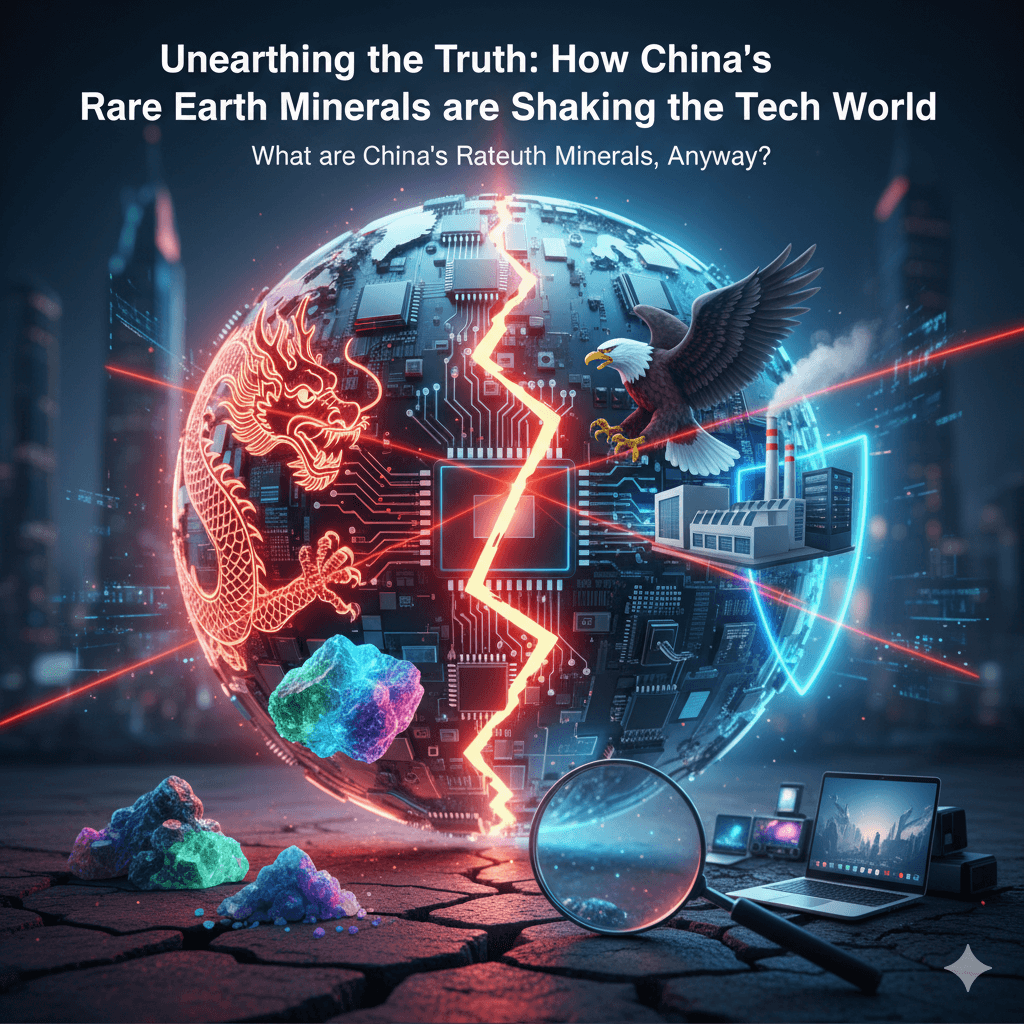
The phrase “rare earth minerals” might not immediately grab headlines, but make no mistake: these obscure elements, largely controlled by China, are at the heart of a rapidly escalating tech showdown. In a bold move that has sent ripples through global supply chains, Beijing has tightened its grip on these crucial resources, threatening to reshape the future of everything from your smartphone to advanced AI. So, what are China’s rare earth minerals, and why are they causing such a stir? Let’s dig in.
What are China’s Rare Earth Minerals, Anyway?
Before we dive into the geopolitics, let’s understand the stars of the show. What are China’s rare earth minerals? They are a group of 17 metallic elements (the lanthanide series, plus scandium and yttrium) that are vital components in countless high-tech products. Despite their name, they’re not actually all that “rare” in the Earth’s crust, but they are rarely found in economically viable concentrations.
China dominates the global production of these minerals, accounting for roughly 90% of the world’s supply. Their unique magnetic, catalytic, and optical properties make them indispensable in:
- Electronics: Smartphones, laptops, hard drives, cameras
- Renewable Energy: Wind turbines, electric vehicle motors
- Defense: Missile guidance systems, jet engines, night vision goggles
- Medical Technology: MRI machines, specialized optics
- Advanced Ceramics and Catalysts: Petroleum refining, pollution control
Essentially, if it’s a piece of modern technology, chances are it contains rare earth minerals.
Beijing’s Power Play: New Export Controls
In a move widely seen as retaliation in the ongoing trade war with the United States, China has announced stricter export controls on these critical minerals, effective November 8th. These aren’t just minor adjustments; they represent a significant escalation.
The new regulations mean that any company, domestic or international, needing to export products containing Chinese rare earth materials will require a license. This extends to foreign-made products if they incorporate Chinese technology or components – a tactic mirroring the US’s own “foreign direct product rule.” The aim is clear: to exert greater control over the flow of these vital resources, especially when it comes to advanced technologies and military applications.
TSMC in the Crosshairs: A Semiconductor Shakedown?
The immediate focus of concern is the semiconductor industry, particularly Taiwan Semiconductor Manufacturing Company (TSMC), the world’s leading contract chipmaker. Companies like Apple, NVIDIA, and AMD rely heavily on TSMC for their cutting-edge chips.
Rare earths are not just a luxury; they are integral to the intricate process of chip manufacturing, used in everything from polishing silicon wafers to advanced lithography. The fear is that China’s new rules could:
- Restrict TSMC’s ability to sell chips to US companies: If TSMC’s supply chain is deemed to rely too heavily on Chinese rare earths, gaining export licenses could become a bottleneck.
- Impact chip-making equipment suppliers: Companies like ASML and Tokyo Electron, vital for TSMC’s operations, could also face hurdles if their own production processes are affected by the rare earth controls.
- Lead to production delays and higher prices: A disruption in the rare earth supply could drive up costs and slow down the production of countless electronic devices.
While Taiwan’s Ministry of Economy has stated they don’t anticipate an immediate “significant impact,” asserting that they source most required rare earths from other regions, the long-term implications for global supply chain stability remain a pressing concern.
The US Fights Back: A Race for Independence
The United States has not taken China’s move lightly. In response to these escalating trade tensions, the US government is aggressively pursuing strategies to reduce its dependence on Chinese rare earths. This includes:
- Investing in Domestic Production: The Department of Defense has poured significant funds into strengthening domestic rare earth mining and processing capabilities, including taking an equity stake in companies like MP Materials.
- Diversifying Supply Chains: Efforts are underway to build secure and independent supply chains, particularly for critical defense applications, ensuring that the US has access to these essential materials from non-Chinese sources.
- Considering Further Trade Actions: The potential for additional tariffs and export controls on the US side remains on the table, signaling a continued escalation of the trade conflict.
The Future: Uncertainty and Innovation
The new Chinese rare earth export controls are more than just a trade dispute; they highlight a fundamental vulnerability in the global technology ecosystem. As both superpowers jostle for technological supremacy, the control over raw materials like what are China’s rare earth minerals becomes a powerful strategic weapon.
The coming months will be critical. Will alternative supply chains mature quickly enough? Will diplomatic solutions emerge? Or will these controls further entrench a bifurcated tech world? One thing is certain: the quest for technological independence and secure supply chains will drive significant innovation and investment in the years to come, as the world grapples with the immense power held by these “not-so-rare” elements.